CUDA SGEMM WHITEPAPER · ARCHITECTURE SITE · KERNEL ACADEMY
A CUDA SGEMM project that reads like a defended technical case
This site is built for interviewers and advanced GitHub readers who care about more than “one fast kernel”. It frames the repository as a chain of architectural claims, optimization decisions, validation boundaries, and research lineage. Read it as a whitepaper first, then as an academy.
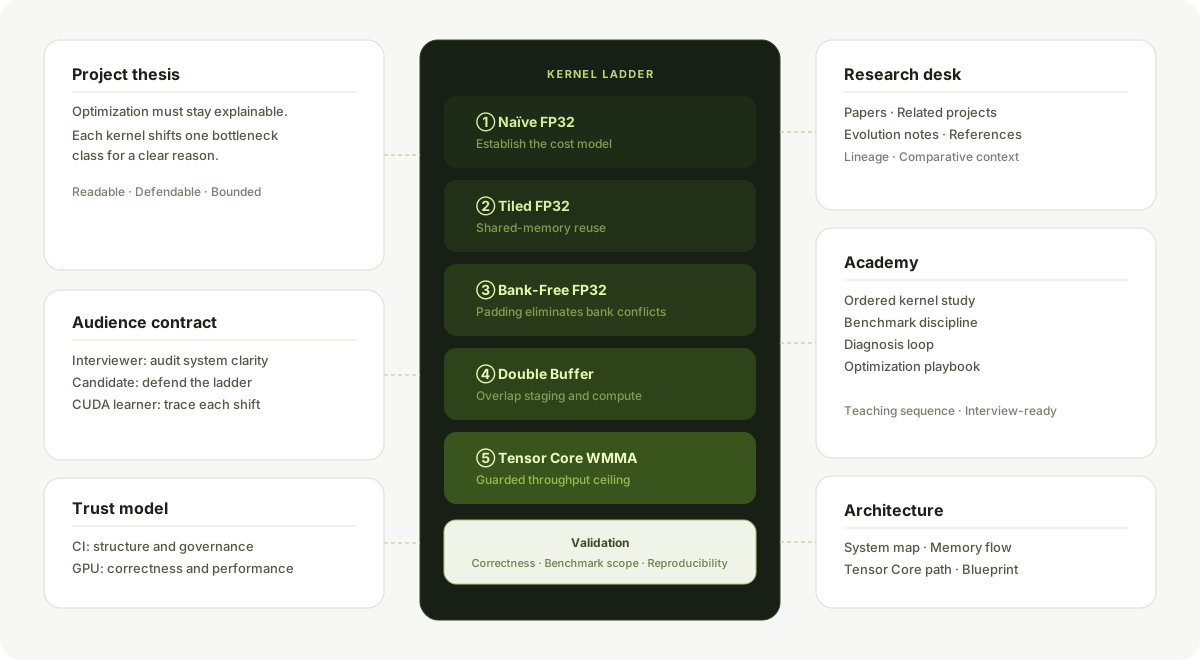
The public narrative is organized like a technical argument: thesis, architecture, academy, proof, then lineage.
Read this site by intent
I need the 90-second project brief
Open the guide first, then jump to architecture if you need the system story behind the summary.
I need to understand why each kernel exists
Start with the ladder and memory model before opening the academy pages that inspect each stage in detail.
I care about proof, not posture
Use validation when you want the correctness policy, benchmark scope, and reproducibility boundary before trusting any number.
I want lineage and comparative context
Use the research desk for papers, related repositories, and notes on how this project’s current shape emerged.
The whitepaper spine
| Surface | What it answers | Why it exists |
|---|---|---|
| Overview | What is this project, why does it matter, how should I read it? | Gives reviewers and new readers one decisive orientation surface. |
| Architecture | How is the SGEMM system structured, and what are its core invariants? | Turns implementation detail into a defendable system map. |
| Academy | How do I study the optimization ladder in a rigorous order? | Packages the repository as a curriculum, not a pile of notes. |
| Validation | What can the evidence prove, and what can it not prove? | Keeps the project technically honest. |
| Research | Where do these ideas come from, and what should I compare against? | Adds academic and comparative depth. |
Architecture, rendered as a controlled figure
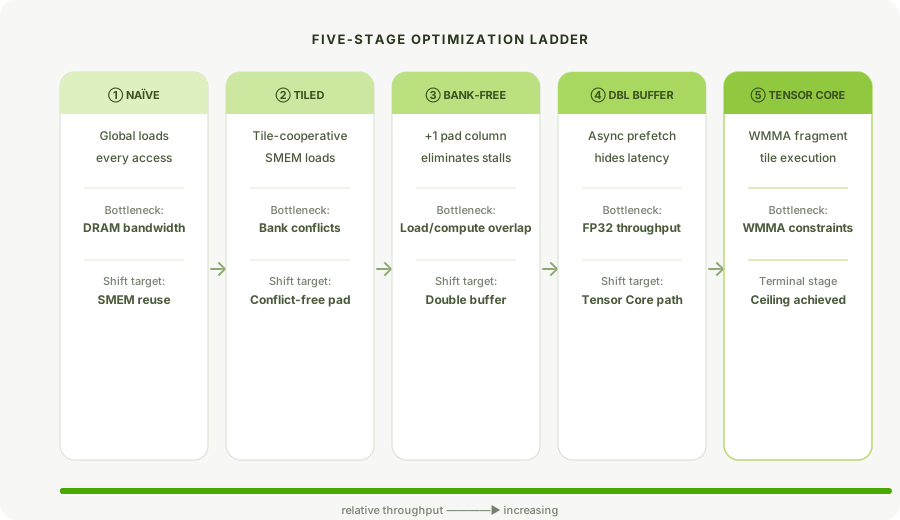
The ladder is not a trophy rack. It is a map of bottleneck shifts, interface constraints, and evidence requirements.
What makes this presentation different
- It treats SGEMM as a technical argument, not a showcase.
- It separates architecture, academy, validation, and research so each page has a single job.
- It uses mirrored English and Chinese routes because public depth is part of the project, not an afterthought.
Start from the repository if needed
- Repository executive summary: README
- Chinese repository entry: README.zh-CN
- Build and validation guide: CONTRIBUTING